
You are about to swap a token, approve a lending market, or sign a transaction for a decentralized application. The website looks familiar, the numbers appear reasonable, and the wallet prompt arrives in the browser. Then you notice a contract address or token allowance you do not recognize. In that moment, the important security question is not simply whether you have chosen a reputable wallet. It is whether you can understand what your wallet is asking you to authorize.
That distinction matters because many DeFi losses do not result from a broken blockchain. They result from a mismatch between the user’s intention and the permission encoded in a signature. A browser wallet can help expose that mismatch, but it cannot eliminate it. Rabby is best understood as a transaction-review and signing interface whose usefulness depends on accurate simulation, clear warnings, a trusted installation path, and disciplined user judgment.
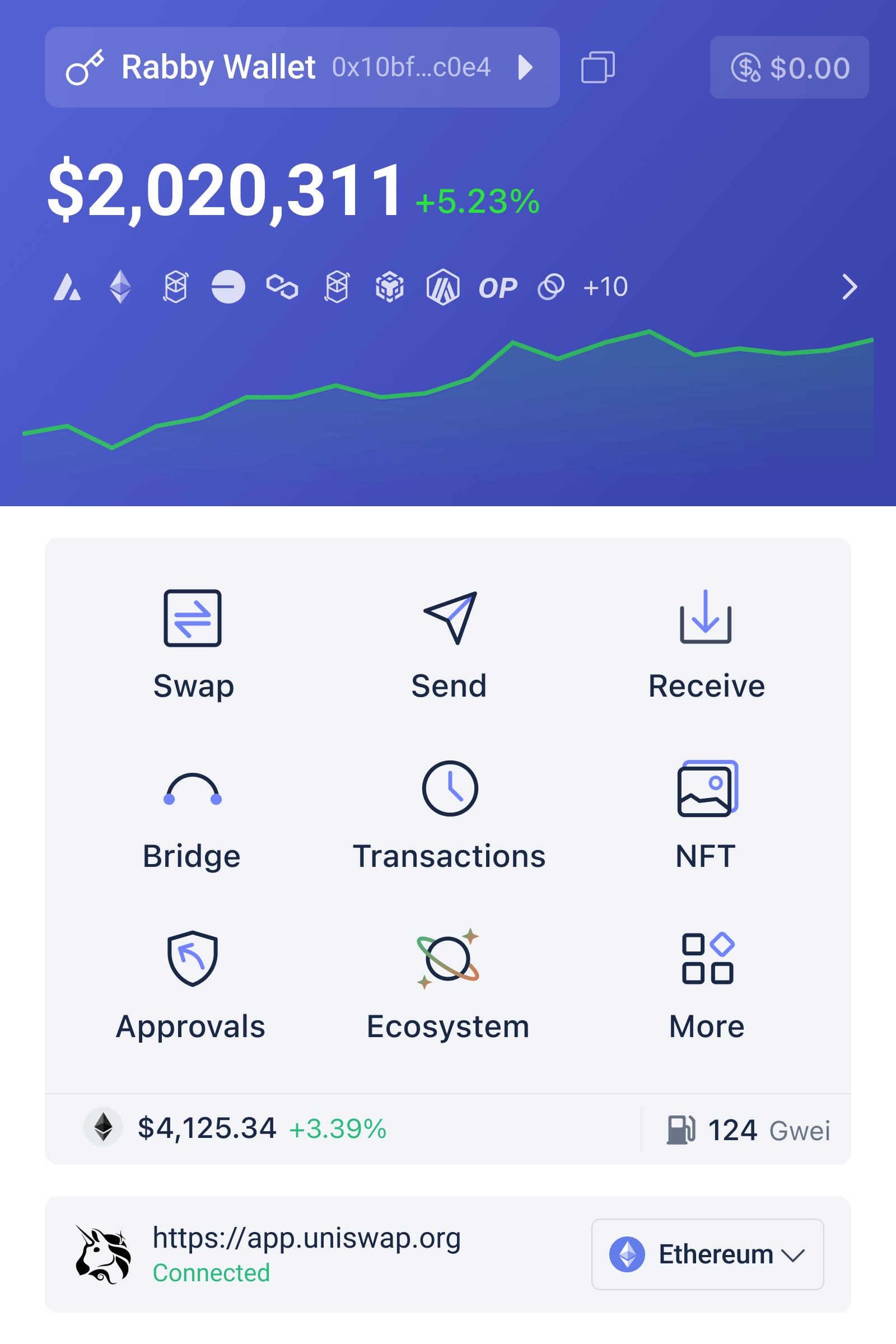
The first misconception: downloading a wallet is not the same as securing funds
A common assumption is that installing a well-known wallet makes DeFi activity safe by default. That is too broad. A wallet extension controls how keys interact with websites and blockchain networks; it does not make an unsafe contract safe, reverse a mistaken approval, or protect a user who deliberately ignores a warning.
The security model has several layers. The browser extension stores or accesses signing credentials, the blockchain records the resulting transaction, and the decentralized application supplies the request that the user reviews. A weakness or misunderstanding at any one layer can create risk. A fake extension may target credentials before a transaction is even prepared. A malicious website may request an unlimited token allowance. A legitimate application may contain a contract bug. The wallet is therefore one control in a larger system, not a complete security boundary.
For users in the United States, the practical implication is straightforward: treat a wallet installation like financial software. Begin from a verified source, check the publisher and extension details in the browser’s official store, and avoid download links delivered through unsolicited messages, search advertisements, or social-media replies. The exact installation interface can change, so the principle is more durable than any particular sequence of buttons: verify provenance before importing assets or connecting accounts.
Readers seeking the official installation path can review the rabby wallet extension information before proceeding, then confirm that the resulting browser listing and domain match the expected publisher. Never enter a recovery phrase into a website claiming to “activate,” “synchronize,” or “verify” an extension. A legitimate wallet does not need your seed phrase through a random support form.
What Rabby-style transaction review actually does
The useful mental model is not “the wallet blocks scams.” It is “the wallet attempts to translate a technical request into a decision a person can inspect.” When a decentralized application prepares a transaction, the request may contain a destination contract, encoded function data, token amounts, gas parameters, and, in some cases, permissions that affect future actions. A review interface can parse those elements and present an estimate of what the transaction is expected to do.
Simulation is especially valuable because the visible button on a DeFi site can be misleadingly simple. “Supply,” “claim,” or “mint” may correspond to a more complicated sequence of contract calls. A simulation attempts to execute the proposed action in an estimated state and identify expected balance changes, approvals, failures, or other effects. This converts part of the review process from reading raw hexadecimal data into comparing the request with the user’s intention.
That conversion is helpful but not infallible. Simulation is an estimate based on available chain state and the behavior exposed by the application or contract. It may not capture every future condition, off-chain dependency, price movement, governance change, or interaction with a contract that behaves differently under another account or block state. A clean preview is evidence that the requested action appears consistent under the tested conditions; it is not a guarantee of economic safety.
This is the central boundary condition: transaction transparency is not transaction wisdom. A wallet may accurately show that an approval grants a contract permission to spend a token. It cannot determine whether the user should trust that contract indefinitely, whether the token is liquid, or whether the strategy’s expected return compensates for smart-contract and market risk.
Approvals, signatures, and the permissions people overlook
Token approvals deserve particular attention because they can outlive the transaction that created them. In a typical approval, a token holder permits a spender contract to transfer a specified amount on the holder’s behalf. If the allowance is unlimited, the permission may remain available until revoked or consumed, depending on the token and contract behavior. The initial interaction may appear routine, while the lasting permission is the more important security consequence.
Not every signature transfers assets immediately. Some signatures authorize an off-chain message, establish an order, delegate control, or permit a later transaction to move tokens. Users often treat a signature prompt as harmless because no gas is required. That is a dangerous shortcut. The absence of a network fee does not prove the absence of economic consequences.
A disciplined review asks three questions. What account or contract is receiving authority? What asset or action is covered? How long does the permission last? If the answer to any of these is unclear, pause rather than relying on visual familiarity. A warning is useful precisely because it interrupts momentum, but a warning that is repeatedly dismissed becomes background noise.
For routine DeFi use, reducing unnecessary permissions can be more effective than trying to recognize every scam domain. Users can prefer limited approvals when supported, revoke stale permissions through a trusted tool, separate long-term holdings from active trading funds, and use a hardware signer for larger balances. These measures add friction. That is a genuine trade-off: convenience and speed are often in tension with review quality and loss containment.
Why network support and address context matter
Modern DeFi is multi-chain. The same account may appear on several networks, while token symbols and application names can be duplicated by unrelated contracts. A wallet interface can help display network context, contract identities, and asset effects, but the user still needs to confirm that the selected chain is the one intended.
Sending an asset to an address on the wrong network, interacting with a counterfeit token, or using a bridge without understanding its trust assumptions can create problems that a transaction preview cannot solve. Bridges introduce additional contracts, validators, message-passing systems, and liquidity arrangements. They may be essential infrastructure, but they expand the number of components that must be trusted or monitored.
A useful operational rule is to distinguish identity from appearance. A familiar token ticker, logo, or application layout is not proof of authenticity. Contract addresses, official documentation reached through known channels, network selection, and the exact requested action provide stronger context. Even then, users should remember that a genuine contract can still be vulnerable or economically unfavorable.
Installation and first-use checklist
Before downloading, close duplicate tabs and avoid installing from a pop-up that claims your wallet is outdated. Use a clean browser profile when practical, confirm the extension’s publisher and permissions, and write down the recovery phrase offline if you create a new wallet. Do not photograph or store that phrase in cloud notes, email, or a password manager unless you fully understand the resulting security trade-off.
After installation, consider creating a low-value test account or sending a small test transaction before moving significant assets. Connect only to applications you recognize, inspect the network and account shown in the wallet prompt, and read the requested permissions rather than approving automatically. For a high-value portfolio, a separate hardware-protected account and a smaller “hot” account for everyday DeFi can limit the damage from a compromised website or mistaken signature.
Security also includes recovery planning. A wallet extension may be unavailable because of a browser failure, device loss, or compromised profile, while the blockchain remains available. Know how your account is recovered, who can access the recovery material, and whether your heirs or trusted representatives could understand the process. Self-custody removes an intermediary, but it also transfers operational responsibility to the user.
What to watch as wallet security evolves
The next useful improvements in wallet security are likely to involve better interpretation rather than louder warnings: more reliable simulations, clearer permission histories, stronger separation between ordinary transfers and administrative actions, and interfaces that explain uncertainty instead of presenting a simple green light. The important signal will not be the number of warnings alone. It will be whether users can distinguish a known risk, an incomplete analysis, and an ordinary transaction that merely looks unfamiliar.
That distinction may become more important as DeFi contracts grow more composable. A single user action can move through multiple protocols, tokens, and permission systems. If interfaces can preserve that chain of causality in a readable form, they may reduce avoidable mistakes. If they compress complexity into reassuring labels without showing assumptions, they may create overconfidence. The outcome depends on design quality and user habits, not on branding.
Frequently asked questions
Is Rabby a guarantee that a DeFi transaction is safe?
No. Transaction previews, simulations, and warnings can improve visibility, but they cannot guarantee that a contract is honest, secure, profitable, or free from future changes. Treat wallet analysis as decision support, then evaluate the application, permissions, network, and amount independently.
What should I verify before installing a Rabby browser extension?
Verify that you are using the expected official distribution route, that the browser listing identifies the correct publisher, and that the extension permissions are reasonable. Avoid unsolicited download links and never disclose a recovery phrase to activate or troubleshoot a wallet.
Why should I care about token approvals if I only made one transaction?
An approval can create continuing permission for a contract to transfer tokens, potentially beyond the immediate transaction. Review the approved spender and amount, prefer limited permissions where practical, and periodically remove allowances that are no longer needed.
Does a wallet warning mean I must never proceed?
Not necessarily. Some warnings reflect incomplete information, unusual contract behavior, or a new application rather than proof of malicious activity. The correct response is to investigate the reason, reduce the amount at risk, and proceed only when the transaction’s purpose and permissions are understood.
The most durable DeFi security habit is not memorizing a list of trusted applications. It is learning to compare intention with authorization. Download the extension carefully, inspect the transaction in context, question persistent permissions, and keep valuable funds separated from experimental activity. A wallet can make that process clearer; the final security decision still belongs to the person holding the keys.